Why Instagram Story Automation Converts Better Than Feed Posts
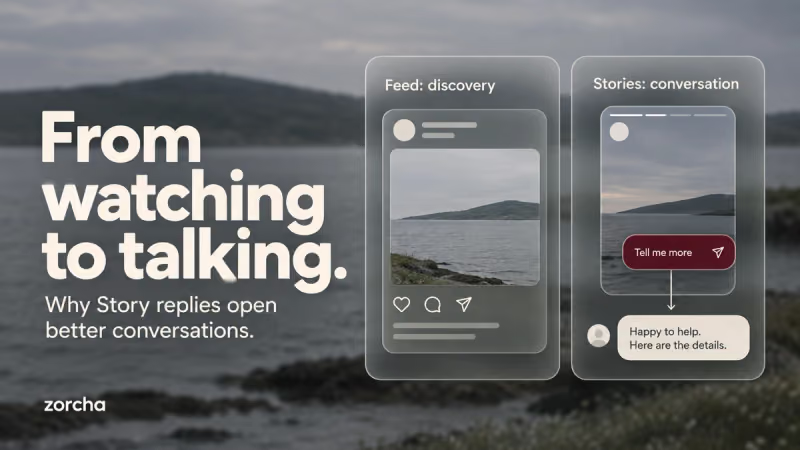
Instagram creators and businesses face a crucial decision: should they focus automation efforts on story replies or comment responses? While both have their place, the data consistently shows that story reply automation outperforms comment automation for conversions, lead generation, and sales.
Understanding why stories convert better than feed posts isn't just about engagement numbers - it's about human psychology, platform behavior, and the fundamental differences in how people consume content across Instagram's various features.
Here's why story reply automation vs comment automation isn't even close when it comes to driving actual business results.
TL;DR
- Story automation creates private, personal conversations that feel more intimate and trustworthy than public comment exchanges, leading to higher conversion rates and deeper prospect relationships.
- The 24-hour lifespan of stories creates natural urgency and scarcity that drives immediate action, while feed posts lack this built-in conversion psychology.
- Story responders demonstrate higher intent by taking multiple actions to engage privately, while comment automation attracts more casual, lower-intent interactions.
- Technical advantages favor stories: instant DM integration, personalized responses, sophisticated follow-up sequences, and clearer conversion tracking throughout the sales funnel.
- Hybrid strategies work best - use comment automation for awareness and community building, then leverage story automation for the actual conversion and revenue generation.
Engagement Behavior Differences Between Feed and Stories
The way people interact with Instagram Stories versus feed posts creates fundamentally different conversion opportunities. Stories feel more personal and immediate, while feed posts feel more public and permanent.
When someone responds to your story, they're essentially sliding into your DMs - a private space where real conversations happen. This creates intimacy that doesn't exist in feed comments, where people perform for an audience of other commenters.
Story interactions happen in real-time. People watch stories as they're posted, creating a sense of immediacy and urgency. Feed posts can be discovered days or weeks later, but the moment has passed, and the conversion opportunity is cold.
The psychological difference is significant: story responders want something specific, while feed commenters might just want to be noticed by your audience.
Also read: 7 DM automation mistakes that get you suspended on Instagram
Visibility and Lifespan Advantages
Instagram Stories have a 24-hour lifespan, which creates natural urgency that feed posts lack. When people see "23 hours ago" on a story, they know they need to act now or miss out completely.
This scarcity drives immediate action. Your call-to-action in a story feels time-sensitive in a way that feed posts never can. "Send me DM for the free guide" hits differently when people know the story disappears in a few hours.
Feed posts theoretically live forever, but practically become invisible within days. The Instagram algorithm buries old posts, making them essentially useless for ongoing lead generation. Stories maintain visibility for their full 24-hour window regardless of algorithm changes.
This combination of urgency, guaranteed visibility, and reduced social pressure creates the perfect environment for conversion-focused automation.
Conversion Psychology: Stories vs Feed Posts
The psychology behind story interactions is fundamentally different from feed engagement, and this affects conversion rates dramatically.
Stories feel like personal communication. When you post a story, it feels like you're talking directly to each viewer. When someone responds, it feels like a private conversation between friends. This personal feeling increases trust and reduces sales resistance.
Feed posts feel like broadcasting. Even with personal captions, feed posts are clearly content meant for mass consumption. Comments feel public and performative rather than genuine and conversational.
The story format itself encourages action. Stories are designed for quick consumption and immediate response. The interface makes it easy to reply, react, or take action. Feed posts encourage passive consumption - people scroll, maybe like, and move on.
Stories create FOMO (fear of missing out) naturally. The 24-hour timer makes every story feel important and time-sensitive. Feed posts don't have this built-in urgency, making procrastination easy.
The informal nature of stories makes people more willing to engage authentically. They'll ask real questions, express genuine interest, and take action more readily than they would in a public comment section.
This psychological environment is perfect for sales conversations and lead generation in ways that feed comments simply cannot match.
Funnel Depth and Quality Comparison
Story reply automation creates deeper, more qualified leads compared to comment automation, and this difference shows up clearly in conversion funnels.
- Story responders take multiple actions to engage: they watch your story, process your call-to-action, switch to messaging, and type a response. This sequence indicates higher intent than simply commenting on a feed post.
- The private nature of story replies means people share more honest information. They'll tell you their real problems, budget constraints, and timeline in a story reply. Feed comments stay surface-level because they're public.
- Story automation can immediately move prospects into your sales funnel through DMs, where you can share detailed information, booking links, pricing, and next steps. Comment automation keeps the conversation public, limiting what you can share.
- The one-to-one nature of story conversations allows for personalized responses and relationship building. Even automated story replies can include personal elements like names or specific interests that comment automation cannot match.
- Story leads typically convert faster because the entire interaction happens in a more sales-friendly environment. DMs feel like sales conversations; comment sections feel like customer service.
Quality metrics consistently favor story automation: higher email signup rates, better show-up rates for calls, and significantly higher close rates for course sales and service bookings.
Also read: What is Instagram comment to DM automation and how to use it
When to Use Story Automation vs Comment Automation
Understanding when each type of automation works best helps you deploy both strategically rather than choosing one over the other.
Use Story Automation For:
- Lead generation and list building - stories create the urgency and privacy needed for email capture
- Product launches and sales - the personal feel and urgency of stories drive purchase decisions
- High-value offers - coaching, courses, and services sell better through story conversations
- Time-sensitive promotions - the 24-hour lifespan creates natural scarcity
- Personal brand building - stories feel more authentic and relatable
Use Comment Automation For:
- Social proof and engagement - public comments create buzz and demonstrate popularity
- Community building - comment conversations include your entire audience
- Content amplification - comments boost feed post visibility in the algorithm
- FAQ responses - common questions benefit your entire audience when answered publicly
- Brand awareness - comment automation reaches people who don't watch your stories
The key difference is intent and privacy. Stories work for conversion-focused automation, while comments work for community and awareness-focused automation.
Most successful creators use both, but allocate more resources to story automation when revenue generation is the primary goal.
Hybrid Strategy: Combining Both Approaches
The most effective Instagram automation strategies combine story and comment automation strategically, using each where it performs best.
Content Strategy Integration
Use feed posts for authority building and social proof, then drive story engagement for conversions. Post valuable content that positions you as an expert, then use stories to convert the audience you've built through feed content.
Cross-feature Promotion
Use comment automation to drive people to your stories. When someone comments on your feed post, automation can remind them to check your story for exclusive offers or additional resources.
Funnel Progression
Start with comment automation for awareness, move to story automation for conversion. Someone who engages with your feed comments might be ready for story-based offers after building familiarity with your brand.
Audience Segmentation
Use different automation for different audience segments. New followers might receive comment automation focused on value and community building, while engaged followers receive story automation focused on offers and sales.
Testing and Optimization
Run parallel campaigns using both approaches, then double down on what works best for your specific audience and offers. Some niches respond better to comment automation, while others heavily favor story automation.
The hybrid approach recognizes that people consume content differently and may prefer different engagement styles. Offering both options maximizes your total addressable audience while optimizing conversion rates.
Also read: What is Instagram reminder automation and how to use it
Technical Differences That Impact Conversions
The technical aspects of how story automation vs comment automation work also affect conversion rates in significant ways.
Response Speed and Timing
Story automation typically delivers responses instantly because stories generate immediate engagement. Comment automation may need to handle multiple responses simultaneously on viral posts, potentially creating delays that hurt conversion rates.
Platform Integration
Story automation integrates more naturally with DM-based sales funnels, email capture, and booking systems. Comment automation requires additional steps to move prospects into private conversations where sales happen.
Message Customization
Story replies allow for more personalized automation because they're private. You can include sensitive information like pricing, exclusive offers, and personal invitations that cannot be shared in public comments.
Follow-up Sequences
Story automation can immediately launch sophisticated follow-up sequences through DMs, email, and other platforms. Comment automation is limited to public responses or requires manual transition to private channels.
Analytics and Tracking
Story automation provides clearer conversion tracking because the entire funnel happens within Instagram's messaging system. Comment automation conversion tracking is more complex due to platform limitations.
These technical differences compound the psychological advantages of story automation, creating multiple layers of conversion optimization that comment automation simply cannot match.
Measuring Success: Story vs Comment Automation
The metrics that matter for automation success look different between stories and comments, and understanding these differences helps optimize your strategy.
Engagement Quality
Story automation should be measured by conversation depth, response time to follow-up questions, and progression through your sales funnel. Comment automation focuses on public engagement volume, reach expansion, and community growth.
Conversion Metrics
Story automation excels in email capture rates, sales conversion rates, and booking completion rates. Comment automation performs better for brand awareness metrics, content virality, and audience growth.
Revenue Attribution
Story automation typically shows clearer revenue attribution because the entire customer journey happens in a trackable environment. Comment automation revenue attribution requires more complex tracking across multiple touchpoints.
Time to Conversion
Story prospects typically convert faster due to the immediate, personal nature of the interaction. Comment prospects may take longer to convert but might represent a larger total addressable market.
Customer Quality
Story automation tends to generate higher-quality customers who are more engaged, pay higher prices, and stay longer. Comment automation may generate higher quantity but potentially lower-value customers.
Understanding these metric differences helps set appropriate expectations and measure success accurately for each automation approach.
Conclusion
Story reply automation consistently outperforms comment automation for conversions because it operates in a more personal, urgent, and sales-friendly environment. The combination of psychological factors, technical advantages, and platform behavior creates multiple conversion advantages that compound over time.
While comment automation has its place in a comprehensive Instagram strategy, businesses focused on revenue generation see better results when they prioritize story automation for their conversion-focused campaigns.
If you're ready to implement story automation that actually converts followers into revenue, Zorcha provides the tools and strategy you need. Our platform specializes in story reply automation that complies with Instagram's policies while maximizing conversion rates for course creators, coaches, and service providers.
Try Zorcha now to see how the right automation strategy can transform your Instagram followers into a profitable business asset.
FAQs
1. Does story automation work better than comment automation for all businesses?
Story automation excels for direct sales, lead generation, and high-value services. Comment automation works better for brand awareness, community building, and viral content strategies.
2. How much better do story conversions typically perform vs feed comments?
Most businesses see 2-3x higher conversion rates from story automation due to the private, urgent nature of story interactions compared to public comment engagement.
3. Can you use both story and comment automation simultaneously?
Yes, the best strategy combines both: comment automation for community building and awareness, and story automation for conversions and sales. They serve different goals effectively.
4. Why do people respond more to story CTAs than feed post CTAs?
Stories feel personal and urgent with a 24-hour expiration, creating FOMO. Story responses are private, reducing social pressure. Feed posts feel public and permanent, making engagement more hesitant.
5. Is story automation more expensive to set up than comment automation?
Initial setup costs are similar, but story automation typically generates higher ROI due to better conversion rates, making it more cost-effective for revenue-focused goals.
6. What types of offers work best with story automation vs comment automation?
Story automation excels with courses, coaching, consultations, and high-value services. Comment automation works better for free resources, community challenges, and brand awareness campaigns.